International Student Loan In New Zealand: Are You Eligible?
28 Jan 2026
Securing an international student loan in New Zealand can alleviate the financial stress of tuition, living expenses, and other educational costs. Understanding the various options for student loans and how to apply is critical for good financial management when studying abroad.
What “International Student Loan” Means in New Zealand?
An international student loan is a sort of loan from private lenders (not NZ’s government) that is used to cover all of an international student’s educational expenses, such as tuition, books, living expenses, and so on. It serves as a means of bridging the financial gap beyond scholarships, with standard elements such as interest rates (fixed/variable) and payback plans.
International student loans may also be available to students enrolled with an overseas education provider, depending on the lender’s eligibility criteria.
Unlike housing or personal loans, this loan can be returned in the midst or end of your studies, or even after you find work. To qualify for most international student loans, students must be officially enrolled in a recognized program.
Quick Answer: Can International Students Get a New Zealand Student Scheme Loan?
No, international students are ineligible to access New Zealand’s domestic student loan scheme, which is exclusively available to New Zealand citizens or residents.
Costs of Studying & Living in New Zealand
Typical Cost Buckets
New Zealand’s flexible education system offers a variety of academic options (from undergraduate to postgraduate levels) to fit any budget. Meanwhile, living expenses will vary depending on your lifestyle and the region of the country where you live. Living in a small town may be less expensive than living in a large metropolis, for example, due to lower housing and transportation costs.
Here is a basic breakdown of the costs of studying & living in New Zealand:
- Tuition: Fees for undergraduate levels range from about $35,000 to $55,000 per year, with higher fees for majors like medicine and veterinary science. Besides, postgraduate levels’ fees range from about $20,000 to $45,000. Lastly, international PhD students pay approximately $6,500 to $7,500 per year for most subjects.
- Living Costs: These costs include different factors and vary a lot. Typically, they are Accommodation, Food & Groceries, Utilities, Internet & Mobile, Transport and Entertainment or other personal needs. Our estimate is around NZD 1,600 to NZD 2,500+ per month.
- Insurance: International students in New Zealand must obtain health insurance to meet the criteria of their New Zealand student visa. Private health insurance normally costs between NZD 500 and NZD 700 per year, with pricing varying by provider and plan tier.
- Flights: International students visiting New Zealand are frequently needed or strongly advised to purchase a round-trip flying ticket. You should anticipate paying anything from a few hundred to over a thousand dollars, depending on the origin and date, with flexibility and student discounts being crucial to saving money.
- Course Materials: Your professor chooses the texts and other materials for your course. They are an additional cost beyond tuition. You expect to budget roughly NZD 500 per year for books and stationery, plus additional fees for specific equipment or activities.
How Much Money You Must Show for a Student Visa (and where loans can fit)

When applying for a student visa, you must show that you have at least NZD 20,000 (or NZD 17,000 for school years 1-13) to pay your living expenses for the first year of study. Shorter study periods will require fewer funds.
To prove that you have sufficient funds, you are required to provide evidence. Certain types of documents are accepted like bank statements, fixed-term deposit certificates, a scholarship award letter, etc. You may need to confirm with your bank or education provider that the funds are genuinely available and accessible for your needs, as immigration authorities will review your financial documents as part of the visa application process. If you decide to get a student loan to fund your study budget and meet the requirements, you can show evidence of a loan and how you plan to repay the loan.
Types of International Student Loan for New Zealand
NZ Government Student Loan Scheme
The New Zealand Government offers a student loan scheme that helps New Zealanders cover their studies and living costs while they are studying. It can be applied though StudyLink.
If you live abroad or earn more than $24,128 per year, you must begin repaying your loan. You will also be required to pay a $40 annual administration charge, as well as any interest or penalties applied to your loan.
If you are under the age of 18, one of your parents must also give you permission to apply for a loan. Furthermore, if you have already received a student loan, you must meet additional requirements.
NZ Bank / Local Lending Options
Many banks and private financial institutions might provide lending choices to native students in NZ and others who are ineligible for government loans. Each loan option has unique qualifying requirements and advantages to meet a variety of financial needs.
Some of the basic requirements are:
- Proof of enrollment in a recognized NZ institution
- Full-time international student status
- Merit and financial need
Yet, these student loan options are UNAVAILABLE for international students due to lack of NZ residency or assets in NZ for banks to secure loans against.
Overseas Education Loans From Your Home Country
As we have discussed, the first 2 options are unavailable or limited to international students. That’s why most international students in New Zealand opt for education loans from their home countries. These loans are often used to fund overseas study, including situations where students are studying overseas with a New Zealand education provider.
This is the most popular option, with specialized lenders providing loans for study in New Zealand and other countries. These international student loans offer unique benefits for international students in New Zealand, including:
- Bank/NBFC support transparent from your home country
- Direct disbursement to New Zealand universities
- Access to various facilities for student loan New Zealand overseas, such as Currency fluctuation protection, Insurance top‑ups and foreign exchange tie‑ups.
Some loans may be interest-free if you are studying overseas through a formal agreement with a New Zealand education provider or zealand education provider, subject to specific eligibility criteria. Compared to similar programs in countries like Canada, New Zealand’s overseas education loan process and eligibility requirements can differ, especially regarding the need for confirmation from the education provider and the application process for interest-free loans.
International Student Lenders (School-eligible lender programs)
In addition to your home country’s loan lenders, there are private non-government providers, offering global loans for international students. To obtain this loan, your educational institutions must be listed below to be eligible by the lenders. The maximum amount that can be obtained on a private loan is the annual cost of attendance minus any expected financial help (loans, awards, scholarships, etc.)
School Payment Plans & Installments (If offered by the provider)
Your private loan provider normally disburses your loan by transferring funds in USD to the University on the specified disbursement date. The University receives the equivalent amount in NZD, which normally takes up to three working days to be deposited into its account. Then, your university adds the available funds to your tuition and fees account.
Each loan can be arranged for up to four disbursements per year. If you need to plan more disbursements, you will need to submit another loan application. However, you may not borrow more than the maximum permitted amount within 12 months.
After a disbursement is allocated to a student’s account, any deficits for the relevant period must be covered by the student, or adjustments to future disbursements can be requested to satisfy the existing dues.
Study Loan For New Zealand: Eligibility Criteria
Eligibility for NZ Government Student Loans
If you want this Student Loan, you must meet specific residency and course requirements, including:
- Must be a New Zealand citizen
- Must be a resident in New Zealand who has lived in New Zealand for at least 3 years and held a residence class visa for at least 3 years
- Must be studying an approved course run by an approved education provider (but you could be based overseas), which has no more than 2 EFTS a year
Eligibility for Private/Overseas Loans
To qualify for an Overseas Education Loan, you need:
- Proof of acceptance to a recognized NZ institution
- A strong academic record
- A co-applicant (like a parent) with stable income
- Credit appraisal of family
- Collateral like property or assets
- Citizenship confirmation
Program & School Eligibility
Eligibility for these school-eligible lender programs is specified by the lenders, which may include:
- Proof that your chosen school or program is approved for their loans
- Your enrollment and costs with the university
- Credit history
International Student Loan For New Zealand: Documents Required

When applying for a study loan in New Zealand, you must provide a variety of documentation. Certain lenders may demand further documents in addition to your loan application form. If you have a sponsor or co-applicant, they are legally responsible for ensuring the loan is repaid if you are unable to meet your obligations.
Core Study Documents
Regardless of what loans you apply for, here are some common study documents that you need to submit to prove your eligibility:
- Offer of Place: A letter from the educational institution in New Zealand confirming your admission. This document may be particularly relevant for private student loans because the lender will only accept students from the courses and institutions on their eligible list.
- Tuition invoice: This document will act as strong evidence that you have accepted the offer and will be attending NZ universities. Besides, the invoice will assist lenders in estimating the total cost of attendance, allowing them to decide the maximum loan amount they may grant.
- Start/end date: This information is important since it allows them to determine several vital features of your loan. Your start date allows the lender to time the disbursement of funds to your university. Meanwhile, the course finish date is the major consideration in determining the moratorium or grace period.
Financial Documents
International student loan lenders require financial documents from both the applicant and their co-applicant (guarantor). These statements are used to verify income, assess financial stability, and determine the ability to repay the loan.
- Bank statements: Lenders utilize bank statements to acquire a complete picture of the borrower’s financial health. They can indicate your spending patterns, consistent expenses, and saving practices. Having a healthy average balance is viewed favorably. Furthermore, these documents allow them to determine the applicant’s current debt-to-income ratio and overall payback capacity. Note that most lenders ask for bank statements from the past 3-6 months.
- Income proof: This is mostly used to determine the ability to repay the loan. This is a normal aspect of the financial documents for both the principal applicant (if employed) and, more commonly, the co-applicant or guarantor (generally a parent or guardian) if you do not have a consistent income.
- Collateral: These could be property papers or fixed deposit receipts. Collateral requirements vary depending on the type of loan, lender, loan size, and borrower’s financial status. International student loans with collateral include lower interest rates and easier eligibility criteria.
- Sponsor letters: Those letters are where a sponsor (your co-applicant or guarantor) confirms they will jointly sign the loan agreement and share equal legal responsibility for repayment.
Visa-aligned Evidence
All international students who wish to study in New Zealand and obtain a private student loan must hold a valid visa. You can apply for funding before receiving a visa. Yet, the loan funds will not be fully approved or transferred to your school until you present a copy of your approved and valid student visa.
Overall, it gives the lender more confidence that you are legally permitted to reside and study. That increases the likelihood that you will finish your study and be able to repay the loan.
Application Process for International Student Loan In New Zealand
Step-by-Step: How to Get an International Student Loan

If you have concluded that you meet the general international student loan standards, you can get ready to begin the application process. Here is a step-by-step guide for getting overseas student loan funding:
Step 1: Research & Compare lenders
- Invest some time researching several international student student loan lenders to help you locate the greatest deal for your financial requirements.
- Lenders have different international student loan requirements, so carefully compare them in terms of interest rates, fees and minimum and maximum borrowing limits.
Step 2: Collect required documents
- After researching different lenders and selecting the best one for you, go over the lender’s international student loan requirements.
- Gather any supporting evidence, such as academic and financial records, that you may need for your application.
Step 3: Submit your application online
- Fill out your loan application.
- Submit it online, along with other necessary documents. Typically, it only takes half an hour to complete the process.
- After you submit your application, the lender will scrutinize it and decide if you match the conditions. They may require additional paperwork before final approval.
Step 4: Sign the agreement & Get a Pre-approved Education Loan Sanction Letter
- If everything is perfect, the lender will prepare to finalize the loan.
- You will receive the loan agreement, which contains information about your loan, such as the principal amount, lending rate, payback period, repayment alternatives, and more.
- Read the agreement carefully and make sure you understand what you’re committing to. If you are ready to proceed, sign it.
- The lender will provide a pre-approved education loan sanction letter, serving as proof of financial capability for universities or visa authorities.
Step 5: Get the Final Sanction Letter & Receive pre‑departure disbursement
- You will receive the final sanction letter, which is the official approval of your education loan.
- Some lenders allow you to access a portion of your authorized education loan before your student visa is granted or you depart your home country, which is known as pre‑departure (pre-visa) disbursement. You can benefit from this because the money disbursed can be used to cover the tuition, travel expenses, visa fee, and deposit needed for a student visa.
How Disbursement Works (Paid to school vs paid to you)
The disbursement of the international student loan amount to the applicant’s account is referred to as the education loan payout process. It is the final step in the application procedure for an international student loan, which is followed by repayment after your studies are finished.
The entire sum is paid out in recurring intervals, usually at the beginning of a new academic year or semester. The lender in charge of disbursement usually works with the university or college to ensure that the loan amount is disbursed on time, taking into account the demands for living expenses, tuition, and academic costs.
Here is the loan disbursement process:
- After your application is approved, you will receive a sanction letter, in which you can find the date of disbursement. Once you receive the final loan sanction letter, acknowledge it, reply to the lender, or recommend a different date for distribution.
- Your loan provider will contact your educational institution. You need to make sure that they reply to the loan provider’s disbursement confirmation as soon as possible.
- The loan will be disbursed following confirmation from you (the borrower) and your institution. It can be paid directly to the school or the student.
- School-channel Disbursement: Most federal and private student loans go straight to the school rather than the student to pay for tuition, fees, room and board, and other expenses. If any funds are left over, the student can request that the school return it to the private institution in order to reduce their loan amount or debt, or they can get the excess through direct deposit or check.
- Direct-to-consumer Disbursement: Some private lenders send the student the money in installments and with conditions. For instance, the student will pay the funds to the school if they must be used for tuition. The student is free to choose how best to use the loan if it can be applied to any educational expenses.
- Depending on case-specific requirements, the first installment of your education loan disbursement often takes 4 to 7 days or longer.
Typical Timelines (Loan approval vs visa application timing)
In order for the loan to be disbursed before the institution’s tuition payment deadline, the loan application must be finished adequately in advance. As a result, starting your loan application 2 to 3 months before your tuition is due is highly recommended. Your university may prevent you from registering or penalize you if the fees are not received on time.
Before submitting your visa application, you must provide the loan approval/offer letter or disbursement if your visa requires proof of funds. Therefore, to avoid visa delays or any adverse impact on your preparation to study in New Zealand, follow our timeline for NZ’s international student loan application and disbursement process:
| Stage | Timeframe (before the semester starts) |
| Secure admission offer | 4 ‑ 6 months |
| Research & Submit education loan application | 3 ‑ 4 months |
| Obtain loan approval | 2 ‑ 3 months |
| Loan disbursement | 1‑2 months |
| Apply for student visas | 2 months |
| Visa approval & Travel preparation | At least 4‑6 weeks |
Repayment of International Student Loan for New Zealand
Interest, Fees, and Repayment Structures
The interest rates offered on education loans for New Zealand international students differ depending on the lender and loan plan, with the typical rate ranging from 9% to 14%. For the record, several loan providers offer lower rates to international students with outstanding academic credentials.
The repayment structures for international student loans are decided by the specific lender. Normally, they include:
- Grace Period: It is a defined amount of time following a payment or obligation’s due date that allows you to fulfill it without penalties, late fees, or bad credit reporting. For most cases, repayments usually begin 6 to 12 months after you complete your study or start working, whichever comes first.
- Tenure: It is the amount of time a borrower has to return a loan in full, including the principal and interest, which is normally allowed up to 5 to15 years.
Repaying From Overseas: Currency Risk (Foreign Exchange + Transfer Costs)
As an international student, your loans mainly come from your home country. If you start repaying your loan while you are still based in New Zealand, this means you are repaying from overseas. That could result in some important things you need to be aware of:
- Most international student loans require payments in the currency of the country where the loan was issued, while some lenders allow you to repay loans in your home currency.
- If your loan supports repayment in home currency, you will normally have to convert your home currency into the loan’s currency using your bank or the lender’s service.
Keep in mind that conversion fees and exchange rate fluctuations can affect the total amount you pay. Besides, there might be additional transfer costs associated with this option, possibly making your total expense mount up.
With such risks, there are something you can do to minimize risk and manage foreign currency fluctuations as you pay off your loan abroad:
- Find a money transfer company that can offer better exchange rates than your bank or loan provider
- Consider using Forward Contracts to secure favorable exchange rates for up to a year
- Set up recurring payments to avoid late penalties
- Compare the value of sending a single larger lump sum vs a series of smaller payments to find a better option
Early Repayment, Refinancing, and Hardship Options
If you attended university in New Zealand and took out student loans abroad, paying off your student loans early saves you money on accrued interest. Yet, your ability to make early repayments and associated costs will be determined by the loan’s conditions. Good news is many private education loan lenders provide flexible choices with low or no penalties for early repayment.
International students who have New Zealand qualifications and meet certain residency or job requirements may be able to refinance their international student loans with private lenders. In fact, some providers allow you to write off any cosigner or collateral associated with your previous loans. Furthermore, you can acquire a fixed interest rate and more convenient, possibly lower installments.
If you find yourself in a difficult situation when you repay your loan, there are several options available to help make things easier:
- Apply for relief options with your lender, such as forbearance (temporarily suspending or reducing payments)
- Negotiate a more affordable repayment plan or an instalment arrangement with your lender
- Apply for grants from your University Hardship Funds
Tips to Find Best Loan Options for New Zealand International Students
Comparison Checklist
When finding the best loan provider as a New Zealand international student, comparison is important. You need go into details of their offers and see which one has the better features, which is dedicated to your success:
- APR (Annual Percentage Rate): It is the entire annual cost of borrowing money, which includes both the interest rate and any other loan-related fees, including origination or closing costs. When searching for a loan, comparing the APRs of several options is the most effective way to evaluate the true cost of borrowing and locate the most economical alternative for your needs.
- Fees: Student loans frequently include a range of fees that can significantly increase the loan’s overall cost. These include application fees, origination fees, late fees, necessary insurance, prepayment penalties, and others. When deciding on a loan, it is critical to factor in these costs.
- Grace period: This period normally begins six months after you graduate or reduce to half-time status. With certain repayment arrangements, the grace period may begin as soon as the loan is disbursed. Furthermore, in most situations, your student loan will incur interest during the grace period. For additional information, contact each supplier.
- Co-signer rules: Lending to international students is deemed high risk due to concerns about their capacity to repay the loan or a lack of established credit history or collateral. A co-signer alleviates these worries by pledging financial support on behalf of the primary borrower. However, there are loan providers that offer loans without requiring a co-signer, which could simplify the application process.
- Foreign Exchange Rates: These rates fluctuate owing to a variety of economic reasons. This means that the amount you convert today will most likely change from when you begin repaying later on, posing a financial risk to international students. When comparing loan options, it is best to find one with a transparent policy and strong system.
- Penalties: When comparing loans, remember to ask for details to avoid any penalties and fees that could raise your overall borrowing costs. It is advised to go for lenders that allow early repayment with no penalties or provide options to pause payments in case of financial hardship.
How to Avoid Loan Scams and Bad Brokers

With high demand nowadays, many bad brokers or even scammers try everything to lure you into their business. To steer clear of them, here are some tips:
- Understand your needs: Make a list of your needs, requirements and supporting papers that a loan provider may need. This information will help you stay on track and avoid all the unrealistic offers.
- Learn specialized terms: Familiarize yourself with common loan phrases you may encounter while looking for an education student loan. By that, you will know exactly your rights and responsibilities, avoiding any deliberately misleading claims.
- Start early: Generally, you can begin the international student loan application process even if your visa status is still pending. The sooner you start, the more time you have to research more options and more thoroughly, preventing you from rushing into any bad decisions.
- Be aware of unusual actions: Some of the warning signs from a scammer or poor broker are requests for upfront fees or payment before loan disbursement, using high-pressure tactics, vague terms, etc.
- Consult with your university: They can recommend reputable lenders and explain the terms and restrictions.
Alternatives to Borrowing
Borrowing is definitely not the only way to help deal with your study and living costs in New Zealand. There are other alternatives to student loans, such as:
- Scholarships: This is 100% the first method that every international student thinks of when it comes to funding their study abroad budget. With so many New Zealand scholarships for international students available, you can easily find one that fits you the most. Just like loans, scholarships have their own requirements you need to meet to obtain them. Having said that, these requirements are merely based on your academic records, which are more easily achieved than those of the student loans. Besides, there is no repayment, no interest rate and fewer limits.
- Part-time work income: If you are a NZ’s student visa holder, you are allowed to work part-time or full-time (during school breaks). The income would help you release some of the financial burdens. Yet, this should be complementary as the hours worked are restricted, leading to limited income. Moreover, NZ’s rules for working as an international student are strict, so you need to understand them carefully. If not, you may lose your student status.
- Budgeting: It is the process of developing a spending plan. Making a budget allows you to know ahead of time if you will have enough money to do the things you need or want to do. By that, you can find a more suitable destination, university or course for your financial situation.
Who Are the Top New Zealand’s International Student Loan Providers?
NZ-Based Options (If you qualify locally)
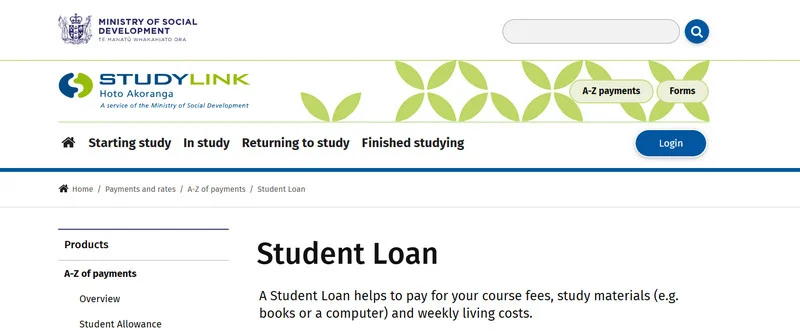
For New Zealand citizens and residents, you are qualified to apply for New Zealand’s government student loan system through StudyLink. This loan is interest-free as long as you live in New Zealand. It is only charged if you travel abroad for more than six months. You can easily manage your loan details and track your balance through your myIR account while StudyLink handles applications and the disbursement of funds.
In addition to the Government Student Loan, students who are New Zealand citizens and residents can turn to local banks like Westpac Bank, Kiwibank, BNZ Bank, etc. These banks offer loans tailored to students and their study with simple requirements like evidence of enrollment in a recognized NZ institution, merit and financial need.
International / Cross-border Lenders (School-eligibility lists)
You can find education loans for international students from global, private lenders. These companies specialize in foreign education funding, often providing loans without collateral or requiring a local cosigner for authorized universities.
Yet, these loans are offered exclusively to students from eligible countries. For example, Sallie Mae private loans are accessible to qualifying US students only who are studying at authorized New Zealand universities such as Victoria University of Wellington, University of Otago, and University of Waikato.
Home-country Bank Loans
The most common loans for international students in New Zealand are from their home-country banks. Depending on your nationalities, you can find proper student loan options for studying abroad.
For example, if you are Indian, you can find education loans for studying abroad in New Zealand from Axis Bank. They provide both secured (with collateral) and unsecured (without collateral) options.
Build a Shortlist Table
| NZ-Based Loan Options | International / Cross-border Lenders | Home-country Bank Loans | |
| Rates |
|
Varies (e.g. Sallie Mae: around 2.89% to over 17% APR) | Varies |
| Fees |
|
Varies but some have no fees | Varies, including establishment fees, early repayment fees and missed payment fees, etc.
|
| Co-signer |
|
Required | Often required while some don’t |
| Disbursement |
|
Directly to your school, usually in multiple installments per semester | Paid both to the education provider and the student
|
| Eligibility |
|
|
|
In Summary
When considering studying in New Zealand, it is critical to understand the many student funding options available. One option is international student loans in New Zealand, which are offered to people in need of further financial assistance.
Many banks and financial institutions specialize in providing student loans to international students. These loans can help with tuition, housing, and other living expenses. Just remember to thoroughly check the terms and conditions of these loans to avoid future problems.
You can find New Zealand PTE requirements on this article : PTE For New Zealand: Everything You Need to Know
Next Steps Checklist
Getting your student loans to study in New Zealand are important steps in your journey. Yet, the finish line is not there since there are other things you need to do to fulfill your dream of studying in New Zealand. So, don’t get ahead of yourself; instead, rev up your engine as we are moving on to the next steps:
- Getting granted a student visa as student loans can act as proof of funds to help you qualify the financial requirements
- Looking for accommodation when studying in NZ
- Applying for a new bank account online
- Buying a new local SIM card online
- Researching the weather to pack appropriate clothes
- Packing all your necessary stuff like papers or daily essentials
- Booking a flight ticket
You can add more to the list based on your personal needs. Having a detailed checklist like this will prevent you from missing anything.
FAQs
1. What factors should students examine before taking out a loan to study in New Zealand?
Students should think about the loan’s interest rates, payback periods, and their future earnings potential after graduation. It is critical to guarantee that they can comfortably manage repayments after completing their courses.
2. Can I pay back my student loan using my country’s currency?
Yes, certain lenders let you repay in your home currency. However, it is dependent on their specific regulations and whatever restrictions they may impose.
3. How much should you borrow for student loans?
Institutions and loan lenders determine how much you can borrow through federal and private loans. Each institution has a cost of attendance (COA), and your loans often cannot exceed this amount.
Typically, you should only borrow what you need. The more you withdraw now, the more you’ll owe in interest later. The COA, while useful, is an estimate. You may need less to attend. Consider your expenditures and personal expenses to establish how much you actually require in loans. You can also use a student loan calculator to determine how much different loan amounts will cost you in the long term.

Moni Vuong
PTE Magic
My name is Moni, and I am a seasoned PTE teacher with over 6 years of experience. I have helped thousands of students overcome their struggles and achieve their desired scores. My passion for teaching and dedication to my student’s success drives me to continually improve my teaching methods and provide the best possible support. Join me on this journey toward PTE success!
Related Blog

28 Jan 2026
How To Study In New Zealand As An International Student

28 Jan 2026
How To Find A Job In New Zealand As An International Student

28 Jan 2026
New Zealand Accommodation Guide for International Students
Frequently Asked Questions
What’s the difference between PTE Academic and PTE Core?
What is PTE Exam Structure and Duration?
How is PTE exam scored?
What tasks are included in PTE Academic?
What tasks are included in PTE Core?
How long is the score valid?
Where can I book PTE Academic and PTE Core exams?
How much does the PTE exam cost?
How can I prepare for the PTE Exam?
Subscribe to our newsletter.

PTE Magic Practice Platform is an AI-powered PTE test prep platform that helps you achieve your desired score with exam-like questions, instant AI scoring, and personalised feedback. Achieve your best PTE score with targeted practice and proven strategies.