Canada Post-Graduate Work Permit Guide
22 Jan 2026
A post-graduation work permit is an open work permit for international students that allows Canadian degree graduates to start a full-time job. Notably, the rules have been tightened with many updates related to the eligibility requirements. Take a look at all the recent changes and how to successfully apply for a Canada Post-Graduate Work Permit.
Work eligibility in Canada after completing your studies (PGWP)
You can continue working under the terms of your study permit after finishing your studies unless one of the following happens:
- Your final marks are released and posted in the online portal.
- Your university verifies that you have fulfilled every requirement for your degree.
If you have taken an authorized leave from your studies, you may still be eligible for a Post-Graduation Work Permit (PGWP) as long as the leave was within the allowed 150-day duration and you have proper documentation from your Designated Learning Institution (DLI) confirming the leave.
When one of these things occurs, you must cease your work immediately and apply for a Post-Graduate Work Permit (PGWP). Given that you are fully eligible for a PGWP, you can continue working.
What is Canada’s Post-Graduation Work Permit (PGWP)?
Canada’s Post-Graduation Work Permit Program allows international students who have finished an eligible study program at a Canadian designated learning institution (DLI) to work in the country for up to 3 years after graduation. This program offers qualified international students an open work permit to work for any employer and in any occupation of their choices.
One of the main advantages of the PGWP is that it allows you to gain Canadian work experience, which can help you stand out as an applicant for immigration to Canada. In fact, many Canadian immigration pathways preferably reward applicants with Canadian work experience.
Canada PGWP eligibility requirements
Generally, to be eligible for the PGWP, you must have:
- Finished a program of study that lasts at least 8 months
- Maintained continuous, full-time student status in every semester (Except for your final semester)
- Met the pgwp eligibility criteria, which include program length, full-time status, and specific study criteria such as language requirements and eligible fields of study
You are considered to be a full-time undergraduate or non-thesis student when attempting a minimum of 12 credits per semester. Non degree programs and diploma programs, as well as traditional degree programs, may qualify for the PGWP if they meet the required study criteria. On the other hand, regardless of how many credits you take each semester, thesis students are regarded as full-time.
Students may need to provide proof of meeting these criteria, especially if they took an authorized leave or were enrolled in a non-traditional program of study.
Importantly, as of November 1st 2024, the PGWP program’s eligibility criteria have been updated.
Recent updates to Canada’s PGWP eligibility requirements
Immigration, Refugees, and Citizenship Canada (IRCC) declared on September 18, 2024, that it will take action to lower the proportion of temporary residents in Canada from 6.5% of the country’s total population to 5% by 2026.
Among several new initiatives, the IRCC declared that starting on November 1, 2024, the PGWP program would be modified to better match the demands of the labor market. The new rules introduce significant changes to language requirements and eligible study programs. Specifically, international students must now meet language requirements as a mandatory condition for obtaining a Post-Graduation Work Permit (PGWP), and only eligible study programs that align with government criteria and labor market needs will qualify.
Yet, there are still things that aren’t affected by this move. To be eligible for a PGWP, you still need to:
- Graduate from an eligible study program at a PGWP-eligible DLI
- Fulfill the general and physical location eligibility criteria
All applicants must meet language requirements, with a minimum level of CLB 7 or NCLC 7 required in each language area.
Overall, if you apply for a PGWP before November 1, 2024, you only need to fulfill the current eligibility requirements and are not affected by the changes described in the next part.
English language proficiency requirements for PGWP-eligible programs
To be eligible for a PGWP, you must now use one of the following tests to demonstrate your language proficiency (with test results no older than two years at the time of application submission). The Canadian Language Benchmarks (CLB) and Niveaux de Compétence Linguistique Canadiens (NCLC) are the official standards used to assess language proficiency for PGWP eligibility, and you must meet the minimum level required for your application:
| For English | * Canadian English Language Proficiency Index Program (CELPIP) General Test; * International English Language Testing System (IELTS) General Training; or * Pearson Test of English (PTE) Core. |
|---|---|
| For French | * Test d’évaluation de français (TEF Canada); or * Test de connaissance du français (TCF Canada). |
Depending on when you applied for your study permit and the kind of program you finished, the new PGWP regulations vary. The detailed changes based on your circumstances are broken down as follows.
For Study Permit Applications Submitted Before November 1, 2024:
If you filed your study permit application before November 1, 2024 and are applying for a PGWP on or after November 1, 2024, you must fulfill the applicable new language requirement.
- For students graduating with a bachelor’s degree, master’s degree, or doctoral degree from a university: A bachelor’s degree is considered a standard qualification for eligibility, and there is no specific field of study required for applicants holding a bachelor’s degree. You must demonstrate your language proficiency in the standardized tests, at a minimum level equivalent to CLB (Canadian Language Benchmark) or NCLC (Niveaux de Compétence Linguistique Canadiens):
- CLB 7 for English
- NCLC 7 for French
- For students graduating in any other university program: You must demonstrate your language proficiency in the standardized tests, equivalent to:
- CLB 7 for English
- NCLC 7 for French
- For students graduating from a college program or any other program not listed above: You must demonstrate your language proficiency in the standardized tests, equivalent to:
- CLB 5 in English
- NCLC 5 in French
For Study Permit Applications Submitted on or after November 1, 2024:
If you submitted your study permit application on or after November 1, 2024 and are applying for a PGWP after November 1, 2024, the new regulations are stricter. In certain situations, you will also need to meet field of study requirements in addition to the aforementioned new language benchmarks.
Eligible fields of study for Canada’s Post-Graduate Work Permit
Based on the regulations updated for study permit applications submitted on or after November 1, 2024, you will need to satisfy field of study requirements in certain cases:
- For students graduating with a bachelor’s, master’s, or doctoral degree from a university: Applicants in this category are eligible to pursue any field of study as there are no further criteria. University programs are generally included, but always verify your program’s CIP code.
- For students graduating in any other university program or post secondary education programs: You must have a degree in a field of study that is relevant to the demands of the Canadian labor market, and your program must be linked to certain occupations experiencing long term shortage.
- For students graduating from a college program or any other program not listed above: You must have a degree in a field of study that is relevant to the demands of the Canadian labor market, and ensure your program falls within the eligible categories as determined by the program’s CIP code.
If your case is subject to the field of study requirement, you must complete an eligible program, including:
- Agriculture and Agri-Food
- Healthcare
- Science, Technology, Engineering, and Mathematics (STEM)
- Trade
- Transport
Programs linked to certain occupations in long term shortage are prioritized for PGWP eligibility. The PGWP pathway requires students to confirm their program is classified as a PGWP eligible program using the program’s CIP code. To find out if your selected program is qualified, you can utilize the online Classification of Instructional Programs (CIP) tool. It is important to verify your program’s CIP code to ensure it matches the official list and that your program falls within the eligible categories.
Graduates from PGWP eligible flight schools are not subject to language or field of study restrictions.
Note: The 178 fields of study that were eliminated on June 25, 2025 will once again be included in the PGWP eligibility list, as stated by the IRCC on July 4, 2025. Thus, students will still be eligible for the PGWP program if they applied for a study permit under one of these fields of study between June 25, 2025, and July 4, 2025.
Where can you apply for a PGWP (inside or outside Canada)?

You can apply for the PGWP from inside Canada or outside the country. Yet, each will come with slightly different eligibility requirements.
IN CANADA: You graduate in Canada and satisfy all other eligibility requirements. Note that:
- If your study permit expires before you receive your grades, you have 2 options: either leave Canada and file for your PGWP, or apply for a visitor record to stay longer.
- If you remain in Canada after your permit expires, you must apply to regain your student status to apply for your PGWP. You will have to pay extra fees to have your status back.
OUTSIDE CANADA: In these cases, you can apply for your PGWP from outside Canada when:
- You graduate outside of Canada and meet the eligibility requirements for distance learning.
- You have completed your study program in Canada and left the country.
Deadline to apply for a Canada Post-Graduation Work Permit
A PGWP can only be given to you once in your lifetime. You may want to postpone applying for it if you want to continue your education. It is highly recommended to apply for your PGWP when you are still holding a valid study permit at the time you receive official notification of program completion. That would give you permission to work right away after receiving your PGWP.
However, you are still eligible to apply if you do not have a valid study permit at the time you obtain official confirmation of program completion. But you must provide a cover letter explaining why. The agent reviewing your application will have the last say over whether to issue your PGWP. Remember that when you want to apply after the expiration of your study permit, you must follow either of the 3 following pathways:
- Change your status to a visitor before your study permit expires
- Leave the country and apply from outside of Canada
- Apply for restoration and your PGWP at the same time
Now, let’s get down to the timeline for applying for your PGWP whether within or outside Canada.
For PGWP applications from within Canada
You should apply within 90 DAYS of receiving confirmation of degree completion. It can be a letter from the Faculty of Graduate Studies for graduate students or the Registrar’s Office for undergraduate students.
Additionally, it is crucial to submit your PGWP application while your study permit is still in effect. Make sure you submit your PGWP application before the end of the 90-day PGWP application window if your study permit is about to expire.
For PGWP applications from outside Canada
You should apply within 180 DAYS of receiving confirmation of degree completion. If not, you won’t be eligible for PGWP until you finish another qualifying program.
Required documents for a Canada PGWP application
Letter of Completion
A Letter of Completion is a document attesting to your completion of all program requirements. As different programs and universities have different procedures, you may need to take action to obtain your Letter of Completion. If you want to request your letter, contact the following:
- For Undergraduate Students: Contact an Academic Advisor from your faculty
- For Graduate Students: Contact your graduate program staff
It must be stated in your paperwork that you have fulfilled every requirement for your degree or that you have successfully finished all program requirements. Keep in mind that your Letter of Completion should include the duration of your program if you are a Master’s, Diploma, or Certificate student.
Note:
- For a PGWP application, a letter indicating that you will soon fulfill your requirements (e.g. you are expected to fulfill requirements pending final grades for the term) is NOT ACCEPTED. Thus, you must wait until after you have finished your requirements before you can apply.
- You must cease working as soon as your Letter of Completion is available because you are no longer permitted to work on or off campus. Once the letter is available, apply for your PGWP to make sure there is no lapse in your eligibility to work (as long as you match all eligibility conditions).
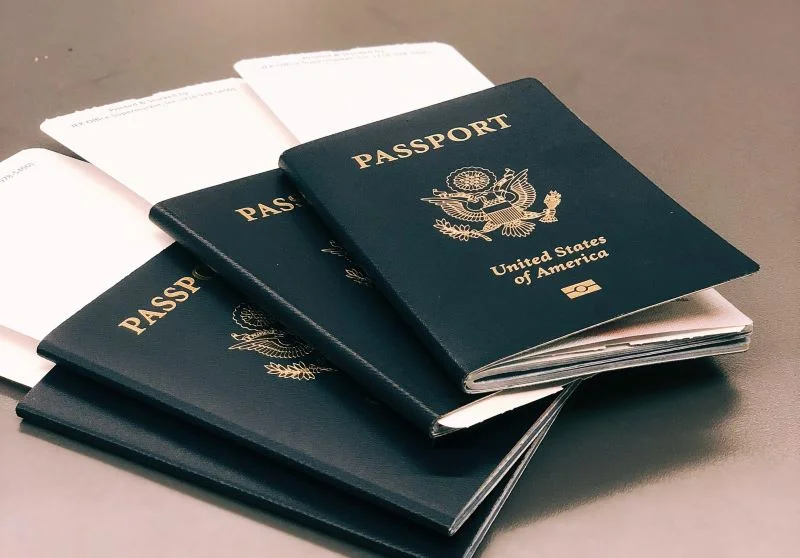
Passport
Before submitting your application for a PGWP, consider extending your passport if it is about to expire. It is because your PGWP cannot be issued after the expiration date of your passport. Besides, you must ensure that your application is submitted within the specified timeframe.
Your passport must be scanned and combined into a single PDF document that contains the following:
- A copy of the bio-data page, which contains your name and picture
- A copy of that has any markings from Canada or other nations, such as stamps, signatures, or visas
Academic Transcript
Your application must include a copy of your official transcript. Before requesting it, you have to wait until all final grades are out. A transcript on paper or in PDF format is allowed. Moreover, the “Explanation of student academic record” page, which appears on the back of each page, should be included in one copy.
You should combine the copy of your transcript with the University’s Definition of Full-time Studies for Immigration Purposes Letter and submit them together.
Digital photo
Your passport photo must adhere to the IRCC photo requirements and be no older than six months.
Proof of language proficiency
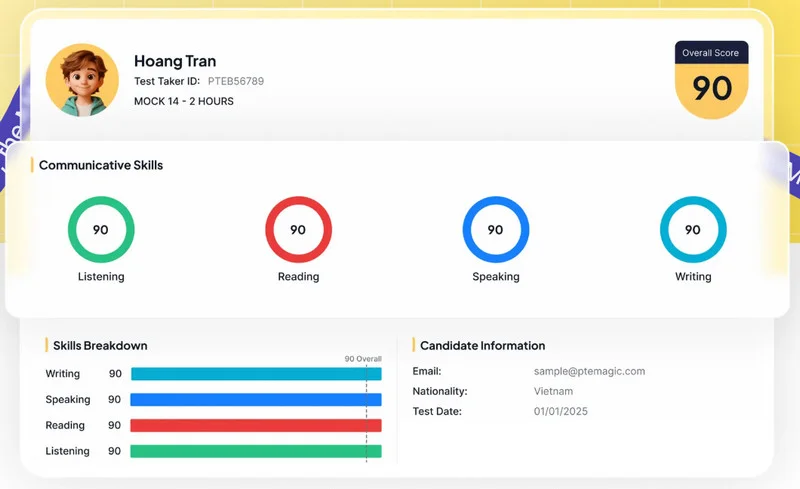
As mentioned above, proof of language proficiency in either French or English is required for all PGWP applications as of November 1, 2024. Even if your first language is French or English, you still can’t be exempted.
There are only certain language tests allowed, so carefully check the language test equivalency charts. Furthermore, your language test results must be less than two years old when you submit your PGWP application.
If you have currently finished a language test, verify whether it is accepted. If not, prepare for a new language test well in advance of submitting your PGWP application.
Other documents you might need
You might require one or more of the following documents, depending on your unique situation.
- Letter of Explanation: Its purpose is to explain your specific situation, including supporting documents, screenshots or any other proof to support your explanation.
- Medical exam report (e-medical): You might need a medical exam done by an IRCC-approved Panel Physician, if you:
- Have lived in certain countries or territories for more than 6 months in the past 12 months.
- Plan to work in sectors like public health, health sciences, education, or agriculture where an employee’s condition could put the public at risk.
Note: You should provide a letter of explanation expressly requesting your work permit to demonstrate you are fully allowed to work in these occupations.
- Schedule 1: Application for Temporary Residence [IMM5257B]: This paper is not obligatory for most students. Only if you select “Yes” for questions 3, 4, 5, or 6 in the “Background Information” will you need to include it in your application.
- Biometrics: You are not required to provide biometrics (a photo and fingerprints) if you have already submitted them in an earlier application. Otherwise, you must turn them in in person at a Service Canada site.
Note: Your biometrics will be valid for 10 years. If it is about to expire, you need to wait until after that happens for your PGWP to be issued. Even though your biometrics are still valid, you need to submit them again and pay the biometrics cost with your PGWP application.
How to apply for a Canada Post-Graduate Work Permit
Your Canada Post-Graduate Work Permit application can be submitted online and costs $255, including a processing fee of CAD $155 and an open work permit holder fee of CAD $100. Yet, that’s for when your study permit is still valid.
If you apply after your study permit expires and you don’t change your status to visitor, you need to restore your student status and then apply for a PGWP within 90 days. You will need an extra fee to restore your status as a student at CAD $389.75. In case you fail to do that, you must leave Canada and apply for a PGWP from outside the country, which could be a little more daunting.
Here is how to apply for a Canada Post-Graduate Work Permit:
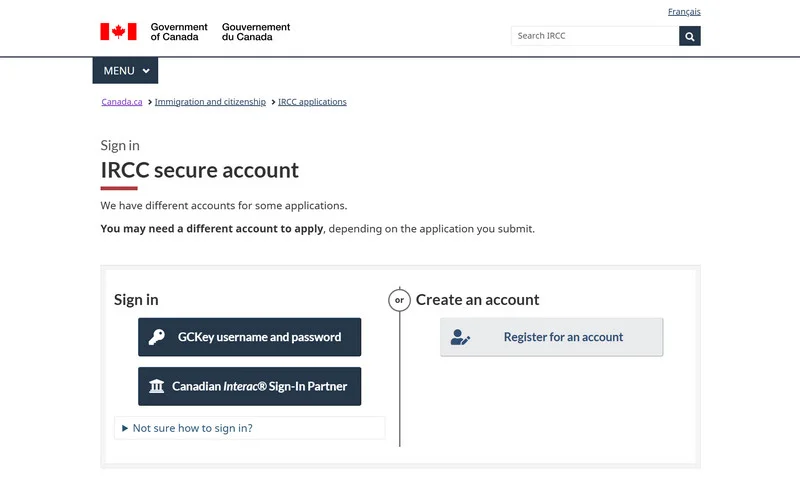
- Step 1: Log into your IRCC GCKey account: You can make a new account if you don’t already have one or if you can’t access your old one.
- Step 2: Prepare required documents: You need to gather all the papers that we’ve discussed above. If your documents are not in either English or French, they must be accompanied by a certified copy of the original document in either English or French together with an affidavit, or by an official translation in either language.
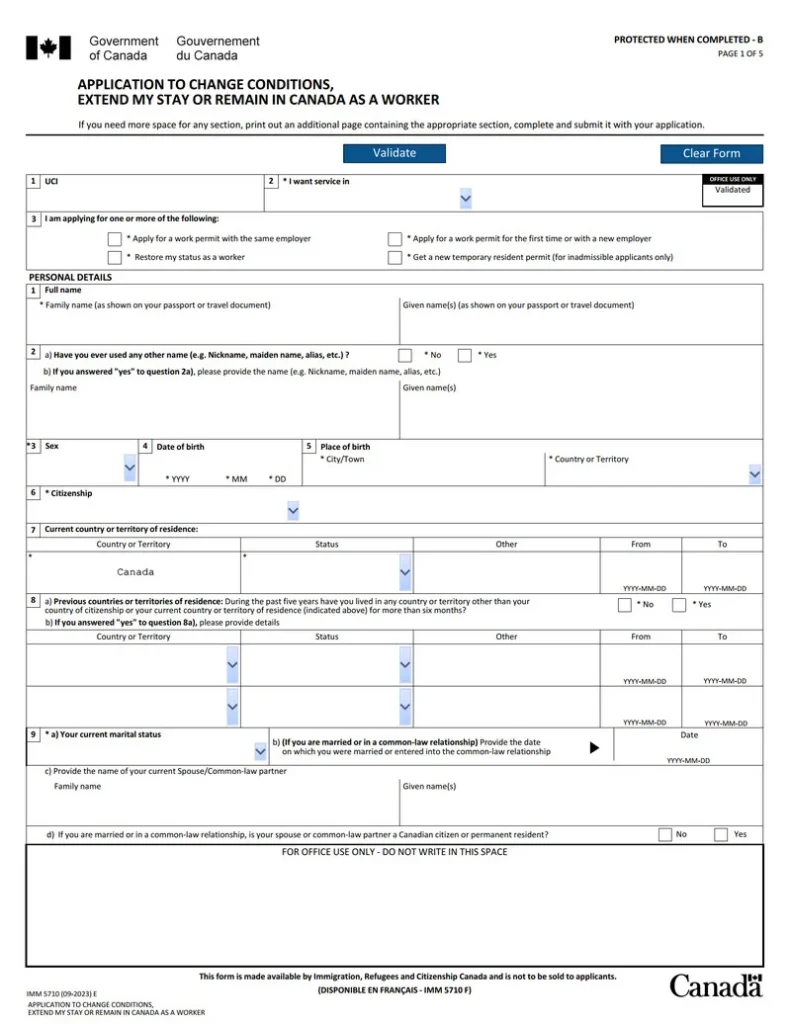
- Step 3: Download and complete the Application to Change Conditions or Extend Your Stay in Canada (IMM 5710) form from the IRCC website for your application.
- Step 4: Pay the fees and submit your application.
Note: The form should not be printed or signed. The form’s signature and dates can be filled up with your name. Select “Validate” after entering your information and if the validation is successful, the form will produce an extra page containing numerous bar codes. Remember to validate the form and save it after each edit.
After you apply for a PGWP: What happens next?
You may expect 3 to 4 months for the processing of your PGWP application. Any updates regarding your application will be sent to you via emails from your IRCC GCKey account. The PGWP will be mailed to the specified mailing address after it has been approved. This process typically takes 2 to 6 weeks.
For PGWP applications from within Canada: You can start working right away if you applied for your PGWP during the first 90 days of finishing your degree while you still had a valid study permit. Besides, you don’t need to wait for the physical work permit to be issued and sent to you so that you can begin working. Yet, if your application is rejected, you will have to quit your job and leave Canada (except that you have another legal status).
For PGWP applications from outside Canada: You will have to wait for the IRCC decision regarding the status of your application before you can come and start working in the country.
How long is a Canada Post-Graduation Work Permit valid?
The duration of your program will determine the validity period of your Canada Post-Graduation Work Permit. If your program’s official duration is:
- Less than 8 months: You are not eligible for the PGWP program.
- Less than 2 years but more than 8 months: You can get a work permit valid for exactly the same duration as your academic program’s. Moreover, if you have graduated from master’s degree programs of at least 8 months, you may be eligible for a 3-year PGWP, as of February 15, 2024.
- 2 years or more: Your work permit can last for 3 years.
Key takeaways on Canada’s PGWP requirements
If you have made it here, you may get enough information to get ready to apply for a Canada Post-Graduate Work Permit. Now, let’s take some time to revise what we have discussed so that you won’t miss a thing, ensuring a flawless application.
- You must cease working (even if it’s part-time work) and apply for a PGWP when your study permit expires. Preferably, you’d better apply for it when your study permit is still valid.
- With a Post-Graduate Work Permit and years of Canadian working experience, you can stand out as a good applicant for permanent residency.
- There are updates about Canada’s PGWP requirements, which makes it harder to apply for a work permit. So, carefully check the changes and stay informed!
- You can apply for a PGWP online within Canada or from outside the country.
- After you receive your work permit, you can start working full-time immediately provided that you qualify for certain eligibility criteria.
FAQs about Canada Post-Graduate Work Permit requirements
1. Who can apply for a Canada Post-Graduate Work Permit?
You might be granted a work permit if you qualify the following requirements:
- General eligibility (Your course duration, your status as a full-time student, etc.)
- Eligibility requirements based on study program
- Eligibility requirements based on physical location
- Field of study requirements (if applicable)
2. Can you apply for the PGWP while on maintained status?
You cannot file an inside Canada PGWP application (IMM 5710) if you are in Canada and have retained your status as a student (i.e., your study permit extension application is currently being processed). Instead, you must either:
- Wait for your application for an extension to be authorized before submitting an inside Canada PGWP application (IMM 5710) before the study permit expires.
- Get out of Canada, wait for your study permit application to be accepted, and then apply for a PGWP outside of Canada (IMM 1295).
3. Can I work throughout the processing of my PGWP application?
You can if you meet all of the following requirements:
- Applying from inside Canada
- Holding a valid study permit at the time you submitted your application
- Attending your university as a full-time student every semester
- Eligible to work off campus without a work permit while studying and you didn’t exceed the work hour limits.
Related Articles :

Moni Vuong
PTE Magic
My name is Moni, and I am a seasoned PTE teacher with over 6 years of experience. I have helped thousands of students overcome their struggles and achieve their desired scores. My passion for teaching and dedication to my student’s success drives me to continually improve my teaching methods and provide the best possible support. Join me on this journey toward PTE success!
Related Blog
02 Sept 2026
PTE Essay Topics 2026: 60 Questions
02 Sept 2026
PTE Exam Pattern 2026: Full Test Structure
02 Sept 2026
PTE Summarize Group Discussion Template
Frequently Asked Questions
What’s the difference between PTE Academic and PTE Core?
What is PTE Exam Structure and Duration?
How is PTE exam scored?
What tasks are included in PTE Academic?
What tasks are included in PTE Core?
How long is the score valid?
Where can I book PTE Academic and PTE Core exams?
How much does the PTE exam cost?
How can I prepare for the PTE Exam?
Subscribe to our newsletter.

PTE Magic Practice Platform is an AI-powered PTE test prep platform that helps you achieve your desired score with exam-like questions, instant AI scoring, and personalised feedback. Achieve your best PTE score with targeted practice and proven strategies.