Best Universities in Canada for International Students
23 Jan 2026
Canada stands out as one of the leading places to study abroad, with many renowned universities in the global rankings.
No matter whether you are looking towards excellence in research, budget-friendly alternatives, or employment-oriented programs, Canada offers something for every foreign student.
This guide covers good universities, tuition fees, campus life, employment prospects, and the process you must follow to apply successfully.
Key Takeaways
- Canada has some of the top universities in the world and good career prospects for foreign students.
- All tuition costs, living expenses, and scholarship programs vary; therefore, the choice of which school to attend depends on personal financial considerations.
- Students can plan an optimal path from admissions to PR with clear instructions at every stage.
Related:
- 10 Best Universities In Australia For International Students
- Study in Canada: Requirements, Costs, Intakes & Scholarships
Why Canada is the Global Student’s Choice

World-Class Education & Research Prowess
Canada’s universities always rank in the top educational institutions in the world; hence, Canada offers quality education to international students.
Canadian university graduates are awarded degrees that are considered to have “substantial weight” around the globe – a “stamp of quality” that translates to immense benefits in their own countries or abroad. Earning a bachelor’s degree from a Canadian university is highly valued for career advancement and is often a key requirement for eligibility for post-graduation work permits.
In addition, many Canadian universities have strong research and innovation cultures, so these can be considered good options for any student who seeks to further develop or participate in innovative projects or who want to prepare themselves at the post-graduate level.
The PGWP: Your Post-Graduation Advantage
One such attractive factor about studying in Canada for foreign students is the ability to stay and work in Canada after completion of studies through the Post-Graduation Work Permit Program (PGWP). Students graduating from an eligible school can apply for an open work permit.
The Post-Study Work Permit can last up to three years based on the duration of your course of study. Program length is a determining factor for the length of the PGWP, meaning that longer programs can provide international students with extended post-graduation work opportunities in Canada.
It’s an immense benefit because you can work anywhere in Canada as an international graduate without any employment offer preceding it. It not only allows you to get real-world experience but can increase your chances in case you are applying for long-term Canada immigration or want to advance in your career in Canada.
Safety, Peace, and Diversity
In addition to academic and employment prospects, Canada has an enviable stable, secure, and peaceful society, which always makes any foreign student feel secure.
Further, Canada has always taken pride in being hospitable and multicultural in nature. In fact, many global student cohorts from diverse ethnicities, environments, and countries have found that Canada embraces diversity. Canadian campuses are known for their high level of student diversity, with students from numerous nationalities and cultural backgrounds, which greatly enriches the overall student experience.
All these factors of social inclusion make it easier for international students to settle in and enjoy the cultural experience that comes with attending the academic institution.
Work and Earn While You Learn
Canada can offer much more than studying in other countries, such as the fact that after enrollment, students can work in Canada, providing them with the invaluable opportunity to earn money.
Working part-time while studying can mean not only financial support but also an actual flavor of the Canadian work environment; and that itself can be an added advantage when it comes to your employability in Canada.
Further, the availability of quality education + employment prospects during student times + post-study employment rights (via PGWP) makes Canada an attractive destination for global students who aim to study smart and build a career in Canada or abroad.
How We Ranked the Best Universities in Canada for International Students

Academic Reputation & Global Rankings
First, we considered the academic and research strength of these institutions – how these institutions fare in global rankings, research output, teaching excellence, and reputation globally. Canadian universities are highly ranked in the Times Higher Education global rankings, which assess teaching, research, and international outlook. For example, top-ranked Canadian universities consistently appear in the global top-tier list based on strong performance in teaching, research environment, and global outlook.
Our own ranking considers both reputation-driven criteria (worldwide ranking) and output-driven criteria (research quality, number of published papers, faculty award).
This means that the universities we feature are not popular in name alone, but in actual academic performance, so you can rest assured that your degree carries clout around the world, whether in Canada or abroad.
Student Support & International Experience
We further appraised the friendliness of the campus to students: support services accessible to international students, diversity, diversity at campus, and facilities that help integrate new incoming international students. Access to these support services is crucial, as it enables international students to conveniently utilize resources and opportunities that facilitate their engagement and success on campus. Scholarly literature regarding international education in Canada illustrates that campus satisfaction, up-to-date campuses, and the quality of faculty are factors in the reputation of such institutions abroad.
Also, Canada has many foreign students in its universities, so the top universities in Canada offer support services such as facilities, orientation, counseling, and multicultural communities, which are essential when studying abroad.
Affordability & Return on Investment
One important factor was cost-effectiveness in terms of the quality of education and return on investment (ROI). It was found that, relative to many other nations, the cost of education at Canadian universities was comparatively less when considered against the global-internet standard of education that they offer.
Tuition cost, availability of scholarship or financial aid (if any), cost of living, and all these factors have been taken into consideration in comparison to the quality of education, employment prospects, and post-study work visa options. It ensures that the university you opt for is not merely prestigious but economical as well in terms of your abroad educational experience.
Career & Immigration Outcomes
Finally and perhaps most pertinent to our international student audience, we considered how well graduates are placed after leaving an institution: employment prospects, post-study work visas, or avenues related to immigrant resettlement. Employment prospects and industry connections are important considerations for prospective students in approaching Canadian universities.
We have also placed greater emphasis upon those institutions with strong indications of graduates finding gainful employment in Canada (or elsewhere in the world) because this adds such strong value to your degree.
Thanks to the availability of post-study work visas or other work visa facilities and immigrant-friendly government policies in Canada, the right university can turn out to not only be an educational destination but also the start of your career or immigrant endeavors.
Top Universities in Canada: Global Ranking and Specialized Excellence
University of Toronto (UofT)
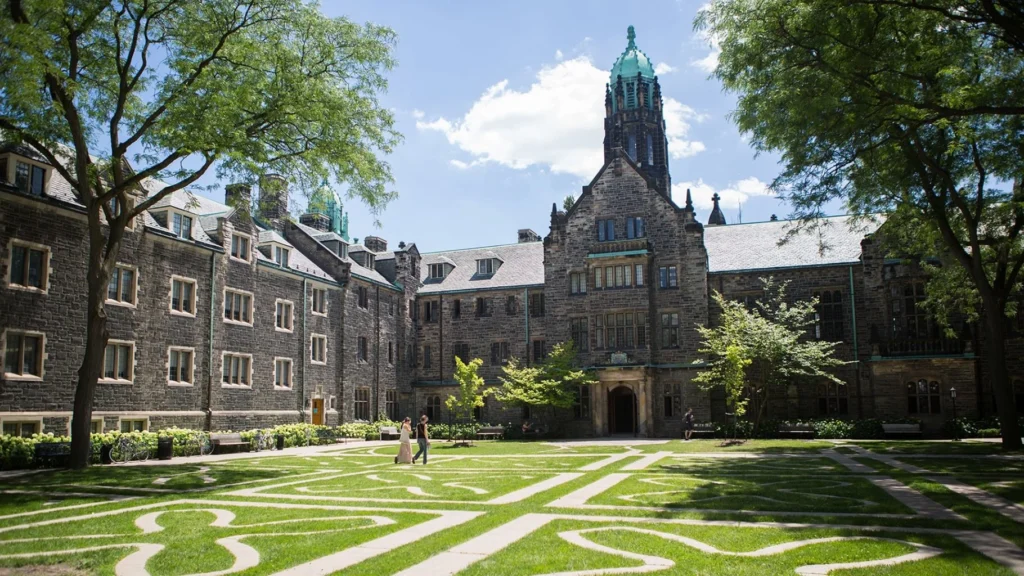
The University of Toronto is considered to be the most prestigious and top-ranked in Canada.
It houses a renowned research environment, has diverse programs (engineering, computer science, business, medicine, arts, et cetera), and operates across four campuses, providing students with a wide range of academic and extracurricular opportunities. The university always ranks in the top universities in the world.
For international students, this means exposure to innovative research, such as the large and diverse population, as well as academic recognition, which can be a big advantage in terms of global mobility or competitive employment.
McGill University
McGill University ranks at the pinnacle of Canadian Universities across the globe in terms of reputation in such fields as medicine, law, arts, and biomedical sciences.
Its campus lifestyle in Montreal, which happens to be an entertaining and diverse cultural hub, presents an attractive amalgamation of global education at relatively low costs in comparison to other big cities in Canada.
For foreigners looking for quality academic reputation and vast global exposure, McGill has the record that can define success.
University of British Columbia (UBC)
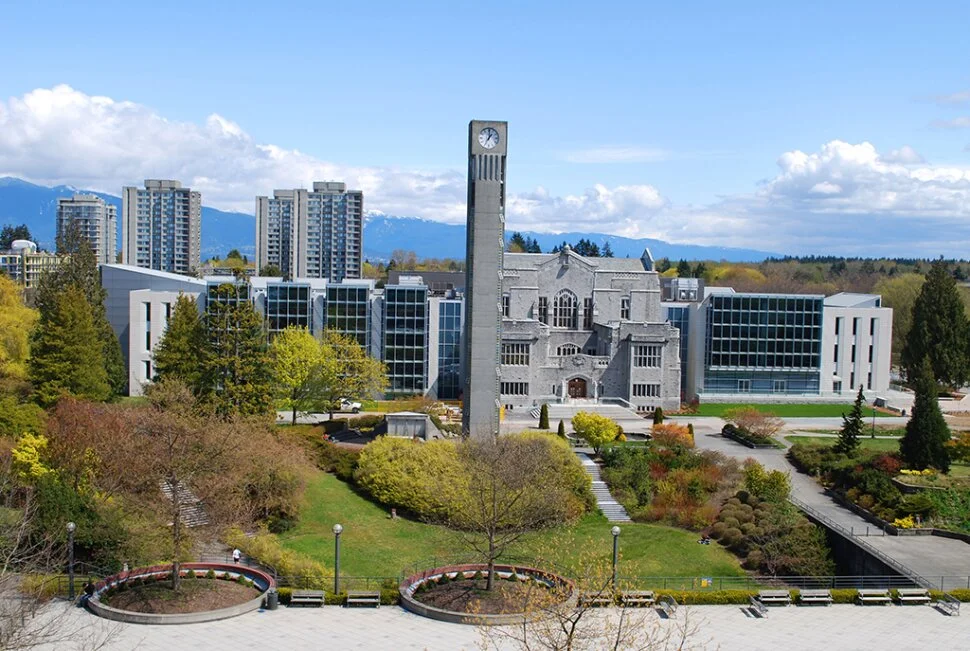
University of British Columbia (UBC) always tops the list of top global universities. UBC has a strong research ethos and course variety, so it offers quality learning.
UBC, based in Vancouver, gives international students the advantage of being in a globally networked city with high living standards and exposure to diverse settings and industries that are global in perspective.
In terms of students who are interested in environmental topics, sustainability issues, engineering, computer science, or global studies, UBC offers a very good blend of quality and lifestyle.
University of Alberta
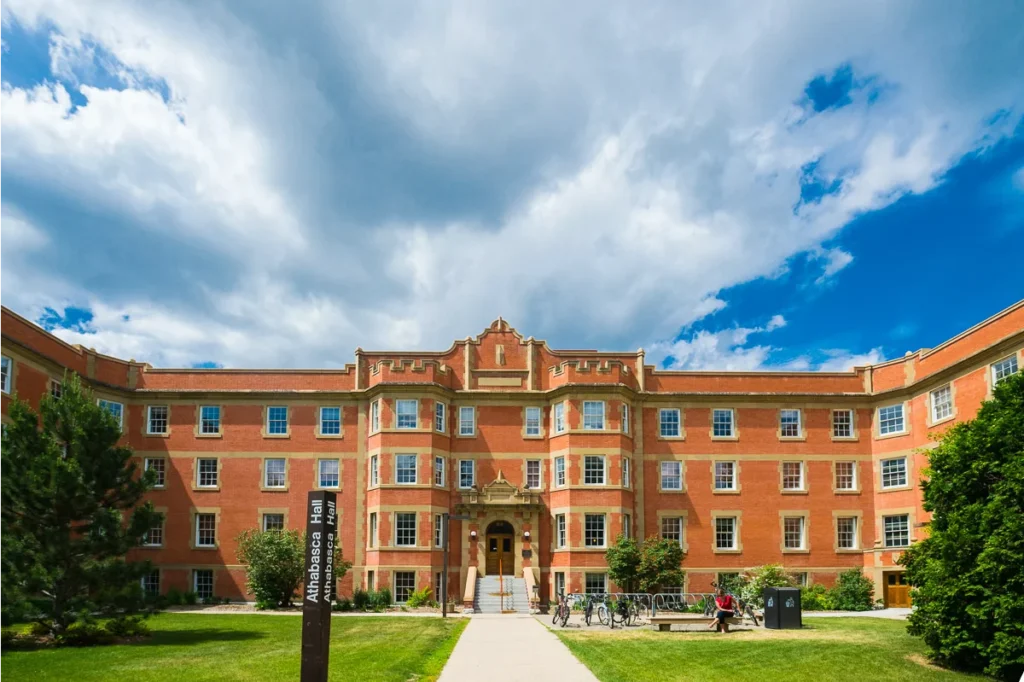
The University of Alberta is another top-rated school in Canada, renowned mainly because of its strong research facilities, diverse range of faculty, and strong academic programs.
Strengths: These tend to be in engineering, scientific disciplines, or related fields with industry, so it would serve a student well who plans to pursue a heavy research or scientific discipline career path.
For foreign students looking at a quality but possibly cheaper Canadian university alternative to the leading global universities, the University of Alberta presents itself as having strong academic rigor in conjunction with good value.
University of Waterloo
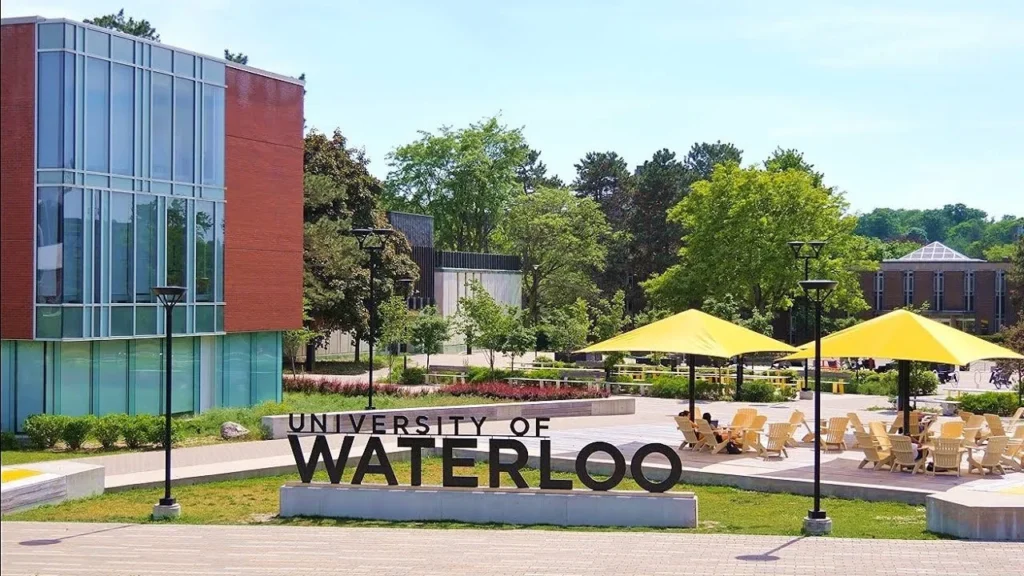
The University of Waterloo has a reputation in Canada as one of the top public universities and specializes in such fields as engineering, computer science, mathematics, information technology, and co-operative programming (internship). Its information technology programs are industry-aligned, focusing on practical, skills-based instruction and strong partnerships with leading tech companies to ensure students are prepared for employment in areas like software, systems, data management, and cybersecurity.
For any foreign student looking at STEM, tech, or interested in both quality academics + exposure in the industry, the co-operative element at Waterloo gives it a big edge.
It makes it an attractive option to people who want to build a career in technology or engineering, or data-related domains, since it offers them the benefits of academic and practical knowledge at the same time.
Universities for Affordability & Regional Appeal (Dalhousie & Manitoba)

Institutions such as Dalhousie University or the University of Manitoba feature in numerous global guides targeting foreign students, come with lower costs of education and living expenses, especially in Canada beyond the country’s largest metropolitan cities.
These campuses could potentially provide a more regional or less cosmopolitan campus experience, which might appeal to students who are interested in studying in less busy environments or at lower costs of living.
For cost-effective international students or those who do not require the “top 30 global ranking” but can settle for a Canadian post-secondary education with reasonable academic standards, alternatives can come in the form of Dalhousie or Manitoba.
Other Strong Options for International Students (York, SFU, Concordia, etc.)
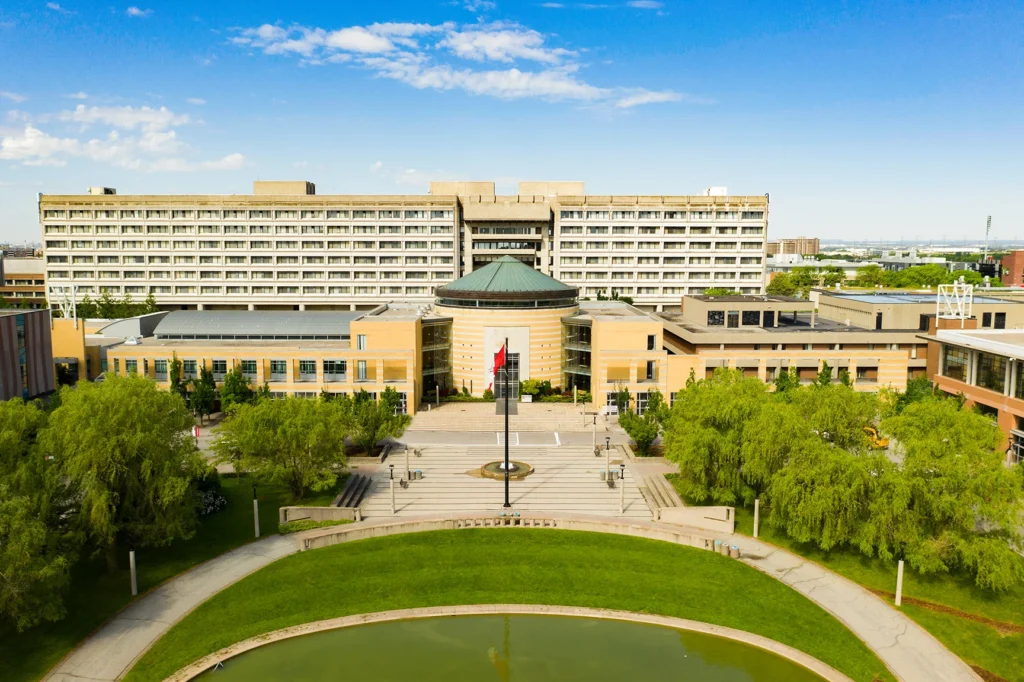
There are other legitimate universities in Canada, like York University, Simon Fraser University (SFU), and Concordia University, which frequently get positive mentions in so-called Canada-wide rankings when it comes to international students.
These institutions can offer much cheaper tuition costs, flexible programs, good support services for international students, and competitive soft or medium-level courses. They are good options to consider when these factors come into play.
For students whose concerns are cost, flexibility, or fit instead of global reputation, these “alternative but strong” alternatives are worth considering.
Best Universities in Canada for International Students by Program Area
Best Universities in Canada for Engineering & Technology
Canada is known to be a hub in global engineering and applied science, with many universities topping the list in terms of innovative research and employment outcomes.
- The University of Waterloo in Canada is the country’s first engineering powerhouse, renowned for its coop program, which is the largest in the world.
- The University of Toronto and the University of British Columbia (UBC) are always in the list of top global universities in engineering, having superior labs, innovation in research, and strong ties with technology and manufacturing industries.
- McGill University equally ranks high in the categories of civil, mechanical, biomedical, and materials engineering.
For foreign students looking to gain employment in Canada’s emerging technology, petroleum, or infrastructure industries, these are some of the best academic institutions offering practical education.
Best Universities in Canada for Business & Management
Canada has an elite academic reputation regarding business education, and many Numerically Rated global business programs receive thousands of foreign applicants every year.
- University of Toronto (Rotman School of Management) has a reputation for having peerless MBA programs as well as strong finance and consulting streams.
- University of British Columbia (Sauder School of Business) – Global Business, Entrepreneurship, Sustainable Business Leadership.
- McGill University (Desautels Faculty of Management) offers a reputation-driven, internationally recognized business curriculum.
- York University (Schulich School of Business) maintains its standing in the list of elite Canadian business schools, popular especially in international business, accounting, and marketing.
For those who are targeting management, financial, marketing, or global industry positions, such institutes would offer good return on investment, diverse student population, and employment prospects.
Best Universities in Canada for Computer Science & IT
Canada’s technology sector is in boom, and its universities offer amazing educational facilities in computer science, artificial intelligence, and data-related subjects.
- University of Toronto has a global reputation in the fields of AI, machine learning, computer science, and innovation.
- University of Waterloo is the top choice for students who want a blend of CS theory + real-world experience, with co-ops at companies like Google, Meta, NVIDIA, and Shopify.
- UBC offers strong programs in software engineering, cybersecurity, data analytics, and human-computer interaction.
- McGill University offers solid basics in CS and front-end technologies such as robotics, algorithms, and comp-bio.
These are the perfect universities for those who want to pursue jobs in Canada’s growing technology sectors in Toronto, Vancouver, Kitchener-Waterloo, or Montreal. Many of these universities also provide non-credit Employment Search Prep courses to help international students prepare for their job search and quickly find employment in digital marketing, IT, and related fields after graduation.
Best Universities in Canada for Health & Life Sciences
Health, medical sciences, and biology are some of the most popular academic disciplines in Canada, and there are many global leaders in medical and biological innovations in Canadian universities. Canadian universities also offer comprehensive health care programs, with a strong emphasis on practical training and preparing students for careers in the health services and medical fields.
- The University of Toronto has excellence in medical research, biotechnology, neuroscience, and pharmacy.
- McGill University has Canada’s leading medical school, and it excels in other fields such as Life Sciences, Psychology, Nursing, and Global Health.
- The University of British Columbia has strong programs in environmental health, life sciences, medical research, and public health.
- The University of Alberta has a reputation for its health sciences complex, medical research labs, and biomedical engineering programs.
For international students intending to specialize in clinical disciplines, research, or postgraduate studies in medical and health sciences, there are good facilities and renowned global reputation.
Best Universities in Canada for Arts, Humanities & Social Sciences
Canada has highly significant programs in the Liberal Arts, Social Sciences, Languages, and Creative Industries.
- The University of Toronto rates very high in the categories of sociology, politics, psychology, philosophy, and linguistics.
- McGill University has good programs in international relations, history, literature, and communication studies.
- UBC specializes in global studies, indigenous studies, film and media, anthropology, and geography.
- Simon Fraser University (SFU) and Concordia University are recognized for communication, media arts, creative writing, and social sciences.
For any student in need of knowledge in communication, global affairs, culture, languages, or creative industries, these universities offer an academic setting that can benefit from strong linkage with the communities surrounding them.
Costs, Scholarships, and Living in Canada as an International Student

Typical Tuition Fees at the Best Canadian Universities
For foreign undergraduates, tuition fees at Canadian universities can range from CAD 20,000 to 50,000 per year, depending upon the course and reputation of the university. These estimates come from recent reports.
It has been estimated in 2025/26 that the average tuition fees per year from undergraduate foreigners in Canada have tended towards ~CAD 42,000.
For post-grad or grad programs, the tuition fee will most likely be lower; in fact, many Master’s level tuition rates at international universities begin at around CAD 24,000-CAD 28,000 per year.
Be aware: tuition costs can go up every year, and professional programs (for example, engineering, medical, or business) tend towards the higher end.
Cost of Living in Top Student Cities (Toronto, Vancouver, Montreal, etc.)
The cost of living is another important factor that matters largely depending upon the lifestyle and locations in the cities you want to target:
- The average cost of living expenses such as housing, food, transport, etc., incurred by international students in Canada per year is approximately CAD 15,000.
- In big cities, the average cost of living, without tuition, can cost between 1,900-2,200 CAD per month, especially in big cities.
- In cities such as Toronto and Vancouver, rent and housing costs are likely to comprise the main outlay, and overall living costs are likely to be high in Canada.
- For example, common or low-cost accommodation, smart budgeting (home-cooked meals, public transport, student discounts) help drastically cut expenses – although ongoing lifestyle habits strongly influence the budget.
Therefore, when you calculate the cost of studying in Canada per year, many foreign students tend to calculate tuition + living costs – which makes Canada a big expense.
Scholarships, Bursaries & Grants for International Students
The good news, though, is that Canada, and many of its premier educational institutes, have several financial aid options in store for international students to help counter the cost of studying there:
- In some universities, significant scholarship money is allocated to undergraduate international students. For example, the University of British Columbia (UBC) allegedly reserves over CAD 35 million every year in scholarship money, awards, and financial assistance for incoming international students.
- One of the most elite awards offered to international students is the Lester B. Pearson International Scholarship (University of Toronto), which offers complete tuition, residence costs, and other benefits to the awarded individual.
- For postgraduate studies, there are scholarship programs and fellowships in Canada as well. These are institutional based, or there are province and government-run scholarship programs.
- Further bursaries or merit-based assistance, such as at the University of Waterloo, could potentially offer small awards (up to several thousand CAD) towards living or educational costs in year two or beyond.
- Non-tuition scholarships, grants, or awards can go a long way in lessening the financial burden, and Canada becomes accessible to international students who apply and prepare wisely.
Campus Life & Support Services for International Students

Housing & Accommodation Options
In Canada, most universities offer residence facilities where most international students find accommodation since these residences locate you in close proximity to all facilities in the university such as classrooms, libraries, food venues, and other student facilities. For example, at the University of Windsor, you can opt to stay in the residence facilities offered, where there are resident assistants and Residence Life Coordinators to help foster a residence community since, at times, most new students like you might need help in adjusting to Canada.
Besides campus facilities, many other universities offer assistance regarding finding housing off campus to these international students. The student or international affairs office usually helps or offers “rental finder” services in handling your housing situation in the foreign cities.
Being based at the campus or through student-sponsored residential arrangements can make many things easier for new arrivals, from accessing services at the university to cultural and social adaptation.
International Student Services & Orientation
Generally, Canadians offer comprehensive support services in universities to incoming foreign students. In Canada, there are support services like academic advisors, writing/study skills centers, visa services, orientation services, and support services for legal/admin issues.
Institutions usually have special orientation weeks or events where the international student can get familiarized with campus regulations, norms of student life, work permit requirements, and other facilities in the larger community.
These services are more than just about logistics; they also offer support services to academics, social integration, and assistance in settling in, thereby ensuring Canada is a welcoming destination for all foreign students.
Health, Wellness & Mental Health Support
In Canada, universities usually offer medical facilities and services as well as counseling and wellness support because studying in foreign environments can cause tension and anxiety due to homesickness, culture shock, and other issues related to mental well-being.
Support might include counseling support, support groups, workshops or wellness events, or basic medical care (or assistance with accessing medical insurance) specifically for the international student population.
Recreation centers or gymnasiums, fitness centers, or social facilities on campus, as well as wellness activities, are also usually provided, enabling students to engage in physical activity, relieve stress, and socialize, which are important components of both academic success and personal well-being.
Student Clubs, Communities & Cultural Life
Campus student activity in Canada can range from diverse student clubs and societies at many American-style universities in Canada to sports teams, cultural associations, and other interest groups, in which the foreign student can participate and get to know fellow classmates. For example, the University of Ottawa offers in excess of 100 student organizations concerned with academic, sports, cultural, political, art, or other matters.
International student organizations, mentorship initiatives, and cultural events help new, international students integrate much more easily into campus life, providing them with “a second family” support network away from family.
Involvement in clubs, cultural events, recreational activities, or social gatherings adds to the overall experience of studying abroad because when you go abroad, you’re there to learn, but you make friends, you get cultural exchange, global networks, and friends who form your social life.
Career Outcomes & PR Pathways for International Graduates in Canada

Co-op Programs & Paid Internship Opportunities
In fact, many Canadian institutions offer co-op or intern-linked degree programs whereby international candidates can gain relevant experience in the industry before finishing their education. In most cases, you can have a co-op or intern work permit when your program needs work experience or internship.
These work placements, when meeting the requirements eligible, can help you gain a CV with actual work experience in Canada, leading towards enhanced employment prospects after completion of your course.
For many students, this can serve as a stepping stone, in that after graduation, they will be able to secure full-time employment out of intern or co-op positions after obtaining an appropriate open work permit (explained in the next section).
Graduate Employment Rates & Top Industries
Latest data reveal that of the international students who graduated in 2020 and remained in Canada (without pursuing further studies), approximately 88.6% of them were employed three years after graduation in 2023.
However, internationals are slightly trailing Canadian-born graduates; in 2023, Canadians had an employment rate of 91.0% compared to 88.6% for internationals.
In terms of sectors related to employment: For those who hold advanced degrees, many foreign graduates can be found working in natural and applied sciences (for example, computer or information systems, programming/web development, data science, and so on) related to STEM and IT fields.
For bachelor or college-level graduates, jobs are found to be predominantly in the area of sales, service, or general services, possibly due to the beginning struggles in entering the job market for new immigrants.
It appears from the data that although many foreign graduates attain employment, job-field alignment, a measure of whether the individual’s occupation at the time of the survey matches the individual’s field of post-secondary education, is less so in the case of foreign versus Canadian-born graduates, at least at the bachelor or diploma level.
From PGWP to Permanent Residency: Typical Timelines & Routes
After finishing an eligible program from an authorized institution, you can apply for the Post-Graduation Work Permit (PGWP). It depends on how long you studied, and if you studied in programs of 2 years or longer, PGWP allows up to 3-year open work permit.
Having work experience in Canada through the PGWP definitely increases your chances of being granted permanent residency. The most popular immigrant options in Canada include Canadian Experience Class (CEC) through the Express Entry System, and Provincial Nomad Programmes (PNP) in Canada, which value work experience in Canada by global graduates.
Historically, study permit -> PGWP -> PR has proved to be an efficient pathway because approximately 75% of the PGWP cardholders attained PR status in less than five years after acquiring the permit.
It was found in data from 2023 that there was a significant number of ex-internationals granted PR as ex-internationals or ex-study permit-holders.
That said, an important caveat: Not all foreign students gain PR in Canada. Estimates peg about 30% of foreign students holding a Study Permit who gain PR status in ten years.
Also, since immigration policy can vary from time to time, mere education will not necessarily qualify someone; rather, there are factors like Canadian education and work experience, and in some cases, provincial or local needs in terms of occupations.
Next Steps for International Applicants
Essential Admission Requirements
To begin, you must apply and gain acceptance into a program at a Canadian educational institution that holds Designated Learning Institution (DLI) status.
Application requirements would generally involve having academic documents, documentation of previous qualification credentials, and, where applicable, English or French language test certifications such as PTE Academic. For most other universities, there could be requirements along the lines of minimum English language proficiency test scores to meet for non-native speakers.
After applying, you’ll receive an official Letter of Acceptance; this letter is important because you can only use it to apply for a study permit.
It shall depend on the province (or territory) where your preferred school is located whether or not you need to secure and submit a Provincial Attestation Letter (PAL) or Territorial Attestation Letter (TAL) in advance of applying for the said study permit.
Finding Financial Support
In Canada, there are many universities that offer scholarship awards or financial assistance to international students. To apply, you can check the “international scholarships/awards” link at your preferred university.
In some cases, there will be applications to make at the same time as applying to the school, and in other cases there will be applications to make beyond the acceptance process, such as scholarship applications.
In addition to the financing related to the universities, you will need to have evidence of financial ability in order to issue your study visa; that is, enough savings to cover tuition, living costs, and return travel.
It is important to plan early regarding financial issues such as tuition costs, accommodation, living expenses, and other expenses for flight visas. It can at times not only secure visa approval but also contribute towards how comfortable you would feel studying abroad.
Applying for the Study Permit
Once you’ve accepted an offer from a DLI and received your Letter of Acceptance (and PAL/TAL, where applicable), it’s important to proceed with applying for the Canadian Study Permit through the official Immigration and Refugee Canada website.
The application has to be submitted before you arrive in Canada (except in case you are already in Canada and eligible to extend).
Typical requirements include: Passport; Letter of Acceptance; PAL/TAL (if applicable); Proof of financial support/funds; Photos; Identity documents; Previous Academic Transcripts; and Biometrics where applicable.
Application fee payment (and biometrics fee, where applicable) and uploading documents. Incomplete documents can delay or lead to the denial of the application.
Application Timeline & Intake Seasons (Fall, Winter, Spring)
In Canada, there are usually three intakes in most universities when applying for admission from abroad, including Fall intake (which begins in September), Winter intake (which begins in January), and the Summer (which begins in May).
The most sought-after intake period is Fall, and it offers the most number of programs. The application dates usually run from December to March of the previous academic year.
Winter intake (January intake) can handle students who missed the Fall intake cut-off dates. The cut-off dates for the Winter intake range from August to November in the preceding year.
There are Summer or Spring intakes in some schools, mainly limited to specialized programs or certifications, and in most cases, these have earlier intake dates (January to March).
Each institute can have its own timeline, so it is important to check the website of the institute you are applying to in order to confirm the intake and date of submission of your application.
Common Application Mistakes International Students Make
Applying or visa submission at the last minute: Applying or submitting visa applications at the final minute can result in missing deadlines, visa approval delays, or visa denial. It has been widely advised to apply as soon as the Letter of Acceptance has been obtained.
Inadequate documentation, particularly inadequate proof of funds or missing PAL/TAL: Inadequate documentation regarding proof of funds or PAL/TAL can result in the deficiency of a study permit application leading to its likely rejection or return.
Failing to consider the requirements in terms of languages or not meeting the requirements in terms of languages test scores: International students are required to meet the requirements in terms of English or French languages at the university. Otherwise, no admission.
Applying to non-DLI Institutions: If the Institute is not considered to be a Designated Learning Institute, you won’t be able to apply through the Institute for a valid Study Permit, which can lead to disastrous consequences.
Not checking program or institutional deadlines and availability of intake: Thinking all programs are available in every intake when in fact some courses are only offered in selected intakes, usually Fall.
FAQs
Can I work in Canada while studying?
Yes, students who have a valid study permit at an authorized school can work both on or off campus under certain terms. If your program has a co-op or internship component that is mandatory in your program, you need to apply for a co-op work permit.
How long does the study permit application process take?
The duration of processing visas will depend on your nationality and the time of year. It is encouraged to apply as soon as possible after getting your acceptance letter and any other documents needed from the province or territory.
Can I change schools or extend my stay if my program is longer than expected or I want to switch universities?
You can but you need to keep your study permit in good standing: stay enrolled in a DLI, make progress in your studies, and apply when changes are required.
Conclusion
Canada offers good educational facilities, employment benefits, and proper career prospects to foreign graduates. By knowing all about your choices, you can easily pick the suitable university.
And when you are ready to start applying, PTE Magic can help you attain the English test scores so you can fulfill your academic dreams in Canada.

Moni Vuong
PTE Magic
My name is Moni, and I am a seasoned PTE teacher with over 6 years of experience. I have helped thousands of students overcome their struggles and achieve their desired scores. My passion for teaching and dedication to my student’s success drives me to continually improve my teaching methods and provide the best possible support. Join me on this journey toward PTE success!
Related Blog

28 Jan 2026
How To Study In New Zealand As An International Student

28 Jan 2026
How To Find A Job In New Zealand As An International Student

28 Jan 2026
New Zealand Accommodation Guide for International Students
Frequently Asked Questions
What’s the difference between PTE Academic and PTE Core?
What is PTE Exam Structure and Duration?
How is PTE exam scored?
What tasks are included in PTE Academic?
What tasks are included in PTE Core?
How long is the score valid?
Where can I book PTE Academic and PTE Core exams?
How much does the PTE exam cost?
How can I prepare for the PTE Exam?
Subscribe to our newsletter.

PTE Magic Practice Platform is an AI-powered PTE test prep platform that helps you achieve your desired score with exam-like questions, instant AI scoring, and personalised feedback. Achieve your best PTE score with targeted practice and proven strategies.